The history of alternative comedy
How a few rooms full of misfits in London, Los Angeles and New York became one of the most influential movements in modern entertainment.
Alternative comedy began as a reaction. In late-1970s Britain it was a reaction against club comics who leaned on mother-in-law gags and racist punchlines, and the new performers at London's Comedy Store and Comic Strip clubs set out to be political, surreal or simply unlike anything on Saturday-night television. In 1990s America it was a reaction against the brick-wall-and-blazer clubs of the stand-up boom. Comedians gathered in coffee shops, bars and tiny theatres in Los Angeles and New York, where they could talk instead of tell jokes, fail interestingly and try material that would have died in a two-drink-minimum room.
Those rooms produced an extraordinary amount of the comedy that followed: sketch shows like Mr. Show, the improv theatres that fed Saturday Night Live, the first comedy podcasts, and eventually a generation of streaming-era auteurs. This section traces that story in order and visits the venues and scenes where it happened. If you want the short version, start with the interactive timeline or our explainer on what alt comedy is.
Start here
What Is Alternative Comedy?
It began as a protest against racist club comics in 1979 London and became the name for any comedy that refuses the usual rules. Here is what “alt” actually means, where it came from and how to recognise it.
Alt Comedy Timeline, 1953 to 2026
From a man with a newspaper at the hungry i to a special premiering on YouTube, here are the moments that shaped alternative comedy, decade by decade.
The Father of Alt Comedy
The title is contested, and that's the honest answer. But some claims are much stronger than others. Here is the case for each candidate, from 1950s nightclubs to a Soho strip-club attic.
Anti-Comedy: The Definitive Guide
A lounge comic who hates you, a moth at the podiatrist, a man reading The Great Gatsby aloud until the audience leaves. Anti-comedy turns the failure of a joke into the joke.
Alt Comedy Glossary (A–Z)
What's a tag? Who's hack? Why did the comic say they ate it? A plain-English glossary of the words comedians, bookers and critics actually use.
Decade by decade
British Alt Comedy, 1979 to Now
It began as a political revolt against mother-in-law jokes in a Soho strip-club attic. Forty-plus years later it runs British TV, Edinburgh in August and half of Netflix's comedy imports.
Alt Comedy in the 1990s
The comedy-club boom collapsed, and a generation of comics went looking for somewhere else to be funny. What they built in LA and New York between 1988 and 1999 still defines American alt comedy.
Alt Comedy in the 2000s
The '90s rebels got jobs. The 2000s turned alt comedy into an infrastructure: improv schools, a late-night cartoon block, indie-rock record labels, YouTube and, right at the end, a microphone in Marc Maron's garage.
Alt Comedy in the 2010s
Streaming bought everything, podcasts took over the commute and the strangest comedians in America got TV shows. It was alt comedy's richest decade, and its most uncomfortable.
Alt Comedy in the 2020s
The decade began with every stage dark and Bo Burnham alone in a room. Six years on, alt comedy lives in theatres, phones and tiny rooms all at once. A running history, current as of October 2026.
The Evolution of Stand-Up
Every era of stand-up was shaped by where it was performed and who decided what got seen. Follow the form from music-hall monologues to the vertical video, and see where alternative comedy fits in.
The Visual Evolution of Alt Comedy
From The Young Ones' punk squat to Tim and Eric's fried VHS and the single room of Inside, alt comedy has always used the look of television against itself. A guided tour of the aesthetics.
The rooms that built it
Alternative comedy has always been tied to specific venues. These are the stages, theatres and back rooms that defined it.
Un-Cabaret
No tight fives, no club patter: Beth Lapides asked comedians to bring something true and unfinished. A generation of LA alternative comics found their voice on her Sunday nights.
Luna Lounge and Eating It
Free rock shows six nights a week, and on Mondays a cheap comedy night where the best stand-ups in New York tried things the clubs wouldn't let them.
Largo at the Coronet
A music club that let comedians in by the side door became the room where LA's best comics try things they wouldn't try anywhere else. No phones, no talking, no exceptions.
UCB Theatre: A History
A sketch group from Chicago opened a basement theatre in Chelsea and accidentally built the main talent pipeline of 21st-century American comedy. Then it nearly vanished.
The Chicago Comedy Scene
Improv was invented as a serious art form in Chicago, then exported to New York, Los Angeles and SNL. Here's the whole lineage, from the Compass Players to the DIY stand-up rooms.
The Rise of Micro-Venues
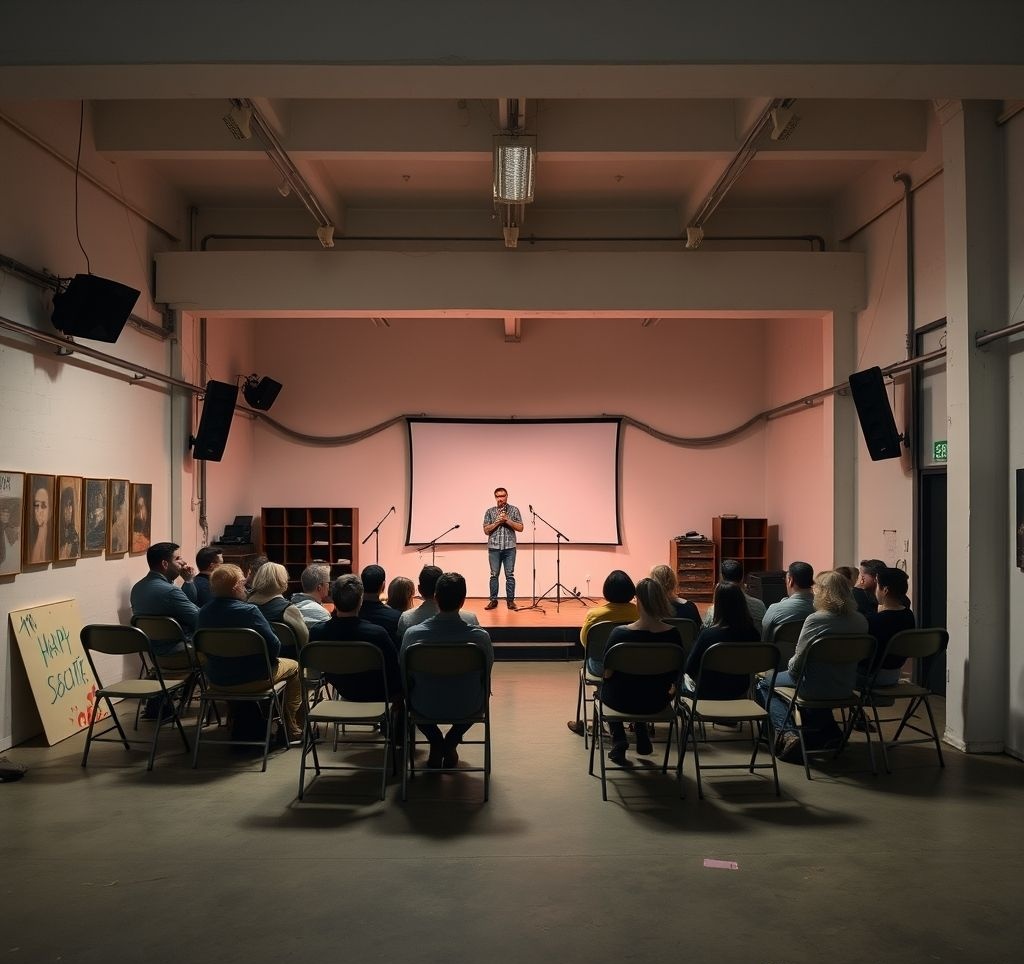
Thirty folding chairs, one mic and a speaker you borrowed from a friend. Small, temporary rooms have always been where alternative comedy starts, and since 2020 they've become the scene itself.
How Comedy Communities Form
Every great comedy scene starts as a few dozen people in the same room every week. What makes some of those rooms turn into movements, and why most of them fade?
Around the world
World Alt Comedy Scenes
Manzai battles in Osaka, English-language open mics in Berlin, crosstalk in Beijing and Instagram skits in Lagos. Where to look for interesting comedy when you leave London and New York behind.
Global Alt Comedy Movements
Alternative comedy wasn't invented in one place. It's a recurring revolt that has broken out in cabarets, student clubs, state TV and YouTube channels for a century, often borrowing from the last uprising.
International Influences on Alt Comedy
Alt comedy is usually told as a London-to-Los Angeles story. Look closer and you find Toronto sketch troupes, Soviet anekdoty, Weimar cabaret, Japanese game shows and Melbourne festival hours all over it.
Cultural Comedy Differences
Slapstick crosses every border. Puns rarely survive customs. A practical guide to how humor changes from culture to culture, with real examples from Tokyo to Montreal.
Everything in History & Scenes
- What Is Alternative Comedy?It began as a protest against racist club comics in 1979 London and became the name for any comedy that refuses the usual rules. Here is what “alt” actually means, where it came from and how to recognise it.
- Cultural Comedy DifferencesSlapstick crosses every border. Puns rarely survive customs. A practical guide to how humor changes from culture to culture, with real examples from Tokyo to Montreal.
- UCB Theatre: A HistoryA sketch group from Chicago opened a basement theatre in Chelsea and accidentally built the main talent pipeline of 21st-century American comedy. Then it nearly vanished.
- Alt Comedy Glossary (A–Z)What's a tag? Who's hack? Why did the comic say they ate it? A plain-English glossary of the words comedians, bookers and critics actually use.
- Anti-Comedy: The Definitive GuideA lounge comic who hates you, a moth at the podiatrist, a man reading The Great Gatsby aloud until the audience leaves. Anti-comedy turns the failure of a joke into the joke.
- The Chicago Comedy SceneImprov was invented as a serious art form in Chicago, then exported to New York, Los Angeles and SNL. Here's the whole lineage, from the Compass Players to the DIY stand-up rooms.
- Alt Comedy in the 1990sThe comedy-club boom collapsed, and a generation of comics went looking for somewhere else to be funny. What they built in LA and New York between 1988 and 1999 still defines American alt comedy.
- Alt Comedy in the 2000sThe '90s rebels got jobs. The 2000s turned alt comedy into an infrastructure: improv schools, a late-night cartoon block, indie-rock record labels, YouTube and, right at the end, a microphone in Marc Maron's garage.
- Alt Comedy in the 2010sStreaming bought everything, podcasts took over the commute and the strangest comedians in America got TV shows. It was alt comedy's richest decade, and its most uncomfortable.
- Alt Comedy in the 2020sThe decade began with every stage dark and Bo Burnham alone in a room. Six years on, alt comedy lives in theatres, phones and tiny rooms all at once. A running history, current as of October 2026.
- Alt Comedy Timeline, 1953 to 2026From a man with a newspaper at the hungry i to a special premiering on YouTube, here are the moments that shaped alternative comedy, decade by decade.
- British Alt Comedy, 1979 to NowIt began as a political revolt against mother-in-law jokes in a Soho strip-club attic. Forty-plus years later it runs British TV, Edinburgh in August and half of Netflix's comedy imports.
- Global Alt Comedy MovementsAlternative comedy wasn't invented in one place. It's a recurring revolt that has broken out in cabarets, student clubs, state TV and YouTube channels for a century, often borrowing from the last uprising.
- How Comedy Communities FormEvery great comedy scene starts as a few dozen people in the same room every week. What makes some of those rooms turn into movements, and why most of them fade?
- International Influences on Alt ComedyAlt comedy is usually told as a London-to-Los Angeles story. Look closer and you find Toronto sketch troupes, Soviet anekdoty, Weimar cabaret, Japanese game shows and Melbourne festival hours all over it.
- Largo at the CoronetA music club that let comedians in by the side door became the room where LA's best comics try things they wouldn't try anywhere else. No phones, no talking, no exceptions.
- Luna Lounge and Eating ItFree rock shows six nights a week, and on Mondays a cheap comedy night where the best stand-ups in New York tried things the clubs wouldn't let them.
- The Evolution of Stand-UpEvery era of stand-up was shaped by where it was performed and who decided what got seen. Follow the form from music-hall monologues to the vertical video, and see where alternative comedy fits in.
- The Father of Alt ComedyThe title is contested, and that's the honest answer. But some claims are much stronger than others. Here is the case for each candidate, from 1950s nightclubs to a Soho strip-club attic.
- The Rise of Micro-VenuesThirty folding chairs, one mic and a speaker you borrowed from a friend. Small, temporary rooms have always been where alternative comedy starts, and since 2020 they've become the scene itself.
- The Visual Evolution of Alt ComedyFrom The Young Ones' punk squat to Tim and Eric's fried VHS and the single room of Inside, alt comedy has always used the look of television against itself. A guided tour of the aesthetics.
- Un-CabaretNo tight fives, no club patter: Beth Lapides asked comedians to bring something true and unfinished. A generation of LA alternative comics found their voice on her Sunday nights.
- World Alt Comedy ScenesManzai battles in Osaka, English-language open mics in Berlin, crosstalk in Beijing and Instagram skits in Lagos. Where to look for interesting comedy when you leave London and New York behind.