Alt Comedy in the 2020s: Lockdown, Solo Shows and the Algorithm
The decade began with every stage dark and Bo Burnham alone in a room. Six years on, alt comedy lives in theatres, phones and tiny rooms all at once. A running history, current as of October 2026.
The 2020s began with the most abrupt change in comedy's history: in March 2020, every stage in the world went dark. What alt comedy built in the silence, and what it became when the rooms reopened, is the story of a decade still in progress. So far it has produced a special made by one man alone in a room, a confession that redefined the stand-up hour, a reality show that rebuilt real places to rehearse life, a wave of theatrical solo shows and a generation of comics discovered through phone screens.
This is the fourth part of our decade series, following the 1990s, the 2000s and the 2010s. Because the decade is ongoing, it is current as of October 2026 and will be revised. The alt comedy timeline has the key dates.
The shutdown, 2020–21
Live comedy stopped almost overnight in March 2020 and returned only gradually through 2021. In the meantime, comedians improvised: Zoom shows with muted audiences, livestreamed sets, drive-in and park gigs, podcasts recorded from closets. The institutions suffered. In April 2020 the Upright Citizens Brigade closed its Hell's Kitchen theatre and training centre in New York, ending the run of the scene's most important venue of the previous twenty years. Many small clubs and bar shows never came back.
Inside
The defining work of the shutdown was Bo Burnham's Inside (Netflix, May 2021). Burnham wrote, performed, shot and edited it alone in one room over about a year. It is a musical comedy special, a diary of a breakdown and an essay on the internet, with each song taking on a different online format, from brand videos and Instagram feeds to livestreams and reaction videos. It won Emmys, topped streaming charts and became the comedy artefact of the pandemic. A year later Burnham posted more than an hour of outtakes free on YouTube. See our Bo Burnham profile and our essay on alt comedy's visual evolution.
Rothaniel and the new confessional hour
In April 2022 HBO released Jerrod Carmichael's Rothaniel, directed by Burnham. Carmichael sat on a stool in a small room and, in a hushed, unhurried set, talked about his family's secrets and came out as gay. There are long silences and conversations with the audience; there are big laughs, but they come when they come. Where Nanette had argued against stand-up's structure, Rothaniel showed how to stay inside stand-up and still go somewhere new. Carmichael pushed further with the HBO series Jerrod Carmichael Reality Show (2024), turning confessional comedy into a documentary about himself.
The theatrical solo show
The clearest artistic trend of the decade is stand-up turning into theatre. Comics are building hours with a director, a set and an arc, then playing them in theatres for weeks rather than clubs for a night.
- Jacqueline Novak, Get On Your Knees: an hour about oral sex as language and literature, directed by John Early, which ran off-Broadway from 2019 and was released on Netflix in January 2024.
- Kate Berlant, Kate: a solo show directed by Bo Burnham that ran off-Broadway in 2022–23 and parodied an actor's self-mythologising. See our Kate Berlant profile.
- Alex Edelman, Just for Us: a story about attending a white nationalist meeting in Queens, which ran on Broadway in 2023 and aired on HBO in April 2024.
- John Early, Now More Than Ever (HBO, 2023): stand-up as a cabaret-concert hybrid with a live band. See our John Early profile.
- Mae Martin, SAP (Netflix, 2023), a personal hour from the creator of Feel Good. See our Mae Martin profile.
The economics help explain it: a theatre run can be more profitable and more artistically controllable than a club tour. But it is also a natural development of the confessional strain in alt comedy that began at Un-Cabaret in 1988.
Television: the Fielder-Robinson decade
Two comedians from the 2010s became the decade's most important TV auteurs.
Nathan Fielder's The Rehearsal (HBO, 2022) built full-scale replicas of real places so ordinary people could rehearse difficult moments in their lives, then turned the cameras on Fielder's own methods. A second season in spring 2025 took on aviation safety and pilot communication. It is cringe comedy, documentary and ethics seminar at the same time. See our Nathan Fielder profile.
Tim Robinson released two more seasons of I Think You Should Leave on Netflix (2021 and 2023), then moved to HBO with The Chair Company (October 2025), a conspiracy comedy that stretched his humiliation-and-obsession style into a serialised story. It has been renewed for a second season.
Elsewhere, HBO remained the alt comedian's best friend: Julio Torres's surreal Fantasmas (2024) followed his film Problemista (A24, 2024), and Hacks (from 2021) gave Megan Stalter and Hannah Einbinder breakout roles. Kate Berlant and John Early's Would It Kill You to Laugh? (Peacock, 2022) revived their double act as a parody of a reunion special. On network TV, Saturday Night Live hired Sarah Sherman (2021), whose body-horror grotesquerie came straight from the Brooklyn alt scene. See our Sarah Sherman profile.
The clip economy
When live comedy returned, the scouting system had changed. Late-night stand-up sets matter much less than they did, and in May 2026 The Late Show with Stephen Colbert aired its final episode after CBS announced in 2025 that it would end the show. The new talent pipeline runs through short-form video on TikTok, Instagram and YouTube.
That favours two very different kinds of comedy. On the mainstream side, crowd-work clips have made some stand-ups into arena acts. On the alt side, the front-facing phone camera has become a new home for character comedy. Megan Stalter's chaotic self-promoters, Atsuko Okatsuka's dance videos with her family (her HBO special The Intruder followed in 2022) and Martin Urbano's deadpan absurdism all grew online before going anywhere else. The open question is whether thirty-second formats can develop the long-form skills that hours and series need; the comics above suggest that the best ones manage both.
Self-release and new distributors
The 2010s specials boom slowed, and comics found other ways to get hours out. Releasing a special free on YouTube, funded by ads, sponsors or touring, went from unusual to routine. Subscription services built on comedy, such as Dropout (the former CollegeHumor, owned by Sam Reich since 2020), proved that an independent comedy streamer could thrive with improvised game shows like Game Changer. Alt elders joined the move: in April 2026 David Cross premiered The End of the Beginning of the End, shot at the 40 Watt Club in Athens, Georgia, on YouTube. Our page on how to self-release a comedy special covers the practical side.
The small-room revival
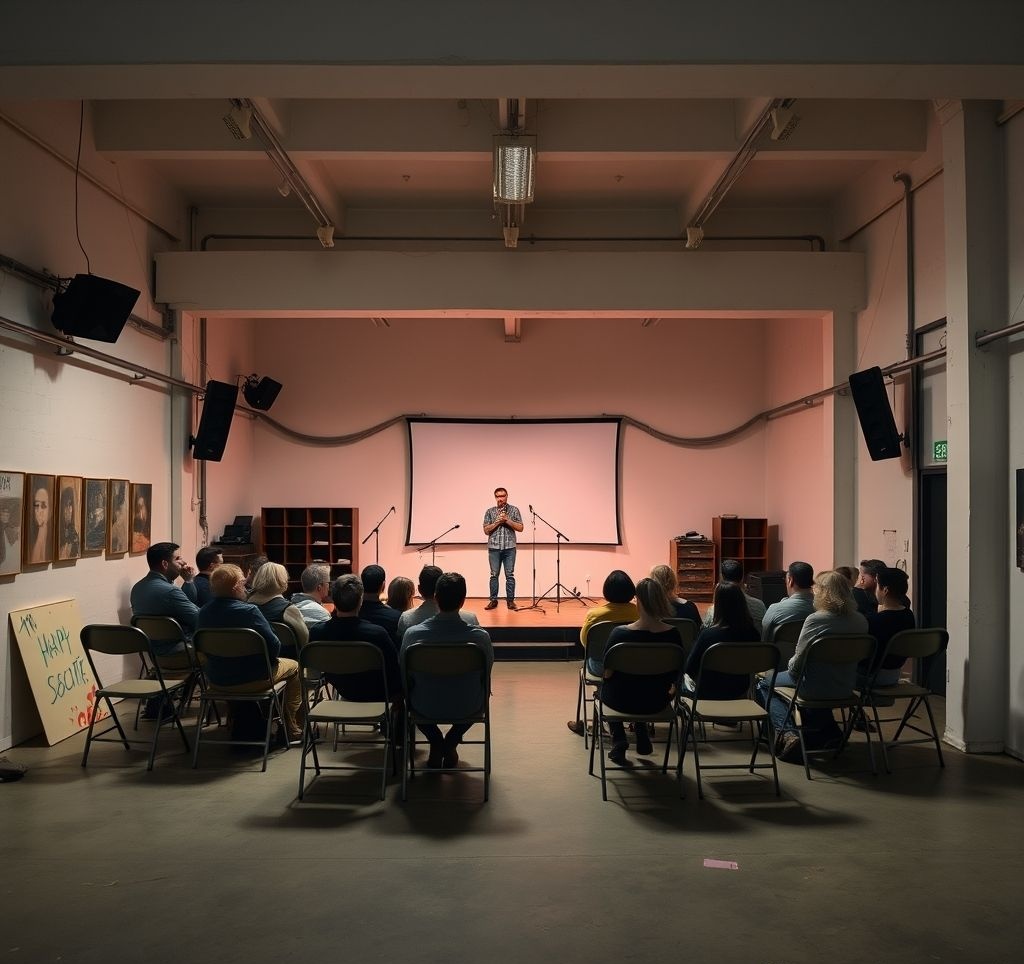
Without UCB at the centre, the live alt scene has decentralised. In New York, much of it runs through bars and small theatres in Brooklyn and Manhattan's Lower East Side; in Los Angeles, through rooms like Dynasty Typewriter and long-running institutions like Largo. Shows are often themed, weird and unrepeatable: character nights, slideshow nights, joke-free nights. UCB returned to New York in September 2024 with a smaller venue on East 14th Street, but it is now one room among many rather than the scene's headquarters. Our page on the rise of micro-venues looks at this landscape in detail.
Beyond America
The Edinburgh Festival Fringe returned at full size in 2022 and remains the world's biggest testing ground for alternative hours. Its main comedy award has gone to some gloriously odd work this decade, including the Australian absurdist Sam Campbell in 2022 and Ahir Shah's more political, essayistic show in 2023. British alt comedians continue to cross over through streaming and panel shows, and international acts now reach American audiences without needing an American network first. Our history of British alt comedy and our guide to international comedy follow those threads.
What to watch next
Six-plus years in, a few patterns are clear. The confessional and theatrical hour has become the prestige form, perhaps too much so: the next alternative will probably push back with pure silliness. Short-form video has made character comedy more popular than at any time since the 1990s. Independent distribution means alt comics no longer need a network's approval, but they also no longer get a network's budget. And the 1990s pioneers are still working, a reminder of how young this history really is. For the year's best new work, see our best comedy specials of 2025–2026 and our list of emerging comedians to watch in 2026.
Frequently asked questions
What is alt comedy like in the 2020s?
It is spread across very different places: theatrical solo shows, HBO and Netflix series, short character videos on TikTok and Instagram, self-released specials on YouTube and a network of small independent rooms. The decade's defining works include Bo Burnham's Inside, Jerrod Carmichael's Rothaniel and Nathan Fielder's The Rehearsal.
How did the pandemic change comedy?
Live comedy largely stopped from March 2020 into 2021. Comics moved to Zoom shows, livestreams and outdoor gigs, institutions like UCB closed venues, and Bo Burnham made Inside alone in one room. When clubs reopened, short online clips had become the main way new comics were discovered.
Who are the key alt comedians of the 2020s?
Leading names include Bo Burnham, Jerrod Carmichael, Nathan Fielder, Tim Robinson, Jacqueline Novak, Kate Berlant, John Early, Julio Torres, Atsuko Okatsuka, Megan Stalter, Sarah Sherman and Mae Martin.
Are comedians releasing specials on YouTube?
Yes. Self-releasing a special for free on YouTube, often funded by ads, sponsors or ticket sales, became common in the 2020s. Alt veterans have joined in: David Cross premiered The End of the Beginning of the End on YouTube in April 2026.