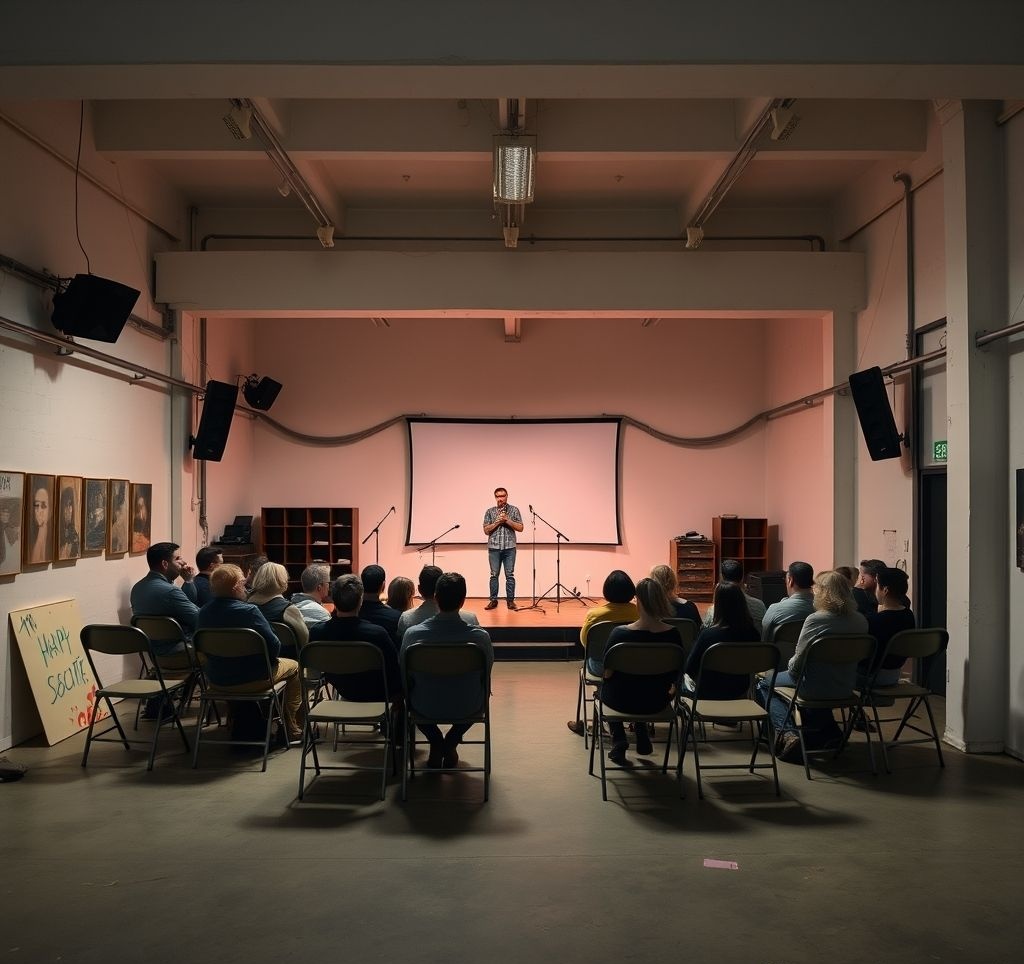
How to Find (or Build) Your Alt Comedy Community
Alternative comedy has always been made by small groups of people who found each other. Whether you want to watch it or make it, here is how to find your people, and what to do if your town doesn't have any yet.
Alternative comedy has always been a community before it was a genre. The Comic Strip in London, the Luna Lounge crowd in New York, the UCB Theatre's early years: each was a small group of performers and regulars who kept turning up for each other. If you love this kind of comedy, as a fan or a performer, finding your own version of that group is the best thing you can do. This guide explains how.
To be clear about what this page is: AltComedy.com is an editorial site. We don't run forums, local chapters or events. What follows is a practical guide to the real places where comedy communities form. For a deeper look at how comedy scenes and online fandoms work as communities, read our essay on comedy communities.
Why community matters in alt comedy
Mainstream comedy can be consumed alone: a special on a streaming service, a famous name at an arena. Alternative comedy usually needs a room. Its best work is often found in small rooms with regulars who know the performers, get the callbacks and are willing to sit through a bit that fails in pursuit of one that's brilliant. The audience is part of the experiment.
For performers, community is even more important. Comedians improve by watching each other, swapping notes, booking each other and building shows together. The history of alternative comedy, from British alt comedy to the American scenes of the 1990s, is largely a history of friends who formed rooms.
For fans: finding your people
Become a regular
Pick one or two shows you like and go every time. Within a few months you'll know the host, the other regulars and the comedians, and they'll know you. It's the oldest and most reliable method there is. Our guide to finding alt comedy events helps you locate shows worth returning to.
Follow the venues and comedians
Independent venues and comedians post shows, guest spots and after-parties on their social media and mailing lists. Following them makes you part of the loop.
Join online fan communities
Much of comedy fandom now lives online, organised around podcasts, YouTube channels, streaming services and individual comedians. Subreddits, Discord servers and fan accounts gather people who share very particular tastes. Pick communities with active moderation and a positive tone; the best ones lead to in-person meetups at live shows and tours.
Go to festivals
Festivals concentrate the community into a few days. At events such as the Edinburgh Fringe or SF Sketchfest, you'll find yourself in queues and bars with people who love exactly what you love. See our festival guide.
Support the scene
Buy tickets, buy merch, pay what you can at free shows, and tell friends. Communities survive when the people in them invest. Small rooms close when audiences stop coming.
For performers: finding your scene
Open mics
Open mics are where most comedians meet their peers. Go regularly, stay for every set and talk to people afterwards. The comedians you start alongside often become your collaborators, bookers and friends for years. Our guide to finding open mics explains how to find them anywhere.
Classes
Improv, sketch and stand-up classes are built-in communities. A level one improv class puts you in a room with a dozen people who want to make comedy, and many sketch groups and double acts begin there. See our improv guide for the major schools.
Local comedian groups online
Most cities have Facebook groups, group chats or Discord servers for local comedians. Ask at mics and you'll be added. These are where shows are announced, spots offered and advice shared.
University and college comedy societies
Student comedy societies have launched many careers, from Cambridge Footlights to campus improv and sketch groups. If you're a student, join one. If you're not, many still welcome outside audiences.
Collaborate
Write a sketch with someone, co-host a show, start a podcast together. Our piece on why comedy partnerships work shows how many great acts began as friends making each other laugh.
Building a community where there isn't one
If your town has no alternative comedy, you can start it. Many famous scenes began this way: one person, one room, one night a month.
- Find a room. A bar, café, bookshop, gallery or community hall with a quiet night. Offer to bring people in; the venue earns on drinks.
- Pick a format. An open mic builds performers; a booked showcase builds an audience; a themed show (stories, characters, slideshows) gives the night an identity. Many scenes combine a mic and a showcase.
- Make it regular. Same night, same time, every week or month. Consistency is how people learn to come back.
- Make it welcoming. Set clear expectations for behaviour, make it easy for new people to sign up, and actively invite performers who don't look like the usual lineup.
- Look after the audience. Start on time, keep it short, and make the room comfortable. A good night is the best promotion.
- Connect to nearby scenes. Invite comedians from the nearest city; they'll often travel for a good room and bring their own connections.
Our comedy production guide covers the practical side of running a live show, from microphones to running orders, and our piece on the rise of micro-venues shows how small rooms have become central to the scene.
If you can't get to live shows
Not everyone lives near a scene, and not everyone can easily get to a late-night show in a bar basement. Community is still possible:
- Watch together online. Watch-along chats for new specials and episodes, and Discord servers built around particular shows or podcasts, recreate some of the feeling of a shared room.
- Follow streamed and recorded shows. Many comedians stream live shows or post full sets, and some festivals offer online programmes.
- Make things remotely. Writing groups, online sketch collectives and remote podcasts let performers collaborate across cities.
- Ask venues about access. Step-free access, captioned or relaxed performances and quieter seating are becoming more common; asking helps venues understand demand. See our page on comedy accessibility.
Online community works best as a bridge, not a replacement. When a comedian you've followed online tours near you, go, and say hello to the other people in the queue who clearly found them the same way.
Keeping a community healthy
Comedy scenes can become cliquey, competitive or unsafe. The healthiest ones share some habits:
- Clear conduct standards. Hosts and producers who act on harassment and make it clear what isn't acceptable.
- Open doors. Regular opportunities for newcomers, not only the established circle.
- Fair pay where there's money. Transparent door splits and paying performers what was promised.
- Generosity. Sharing spots, giving notes kindly, celebrating when someone in the group succeeds.
Staying in touch with AltComedy.com
We're a small editorial site, not a community platform, but we read what readers send us. If you run a show, a scene or a festival you think we should know about, or you've spotted something we've got wrong, get in touch through our contact page.
Frequently asked questions
How do I meet other comedy fans?
Go to the same local shows regularly, follow the venues and comedians you like, and talk to people at shows. Online, fan communities form around podcasts, streaming channels and individual comedians on Reddit, Discord and social media.
How do I meet other comedians as a beginner?
Go to open mics and stay for the whole thing, take an improv, sketch or stand-up class, and join your city's local comedian groups online. Comedians bond through repeated stage time together.
How do I start a comedy show in a town with no scene?
Find a bar, café or bookshop with a quiet night, agree a simple deal, book a host and a few local performers, and run it on a regular schedule. Consistency builds both an audience and a community.
Does AltComedy.com have forums or local chapters?
No. AltComedy.com is an editorial site and doesn't run forums, chapters or events. This guide points you to the real places comedy communities meet.