Comedy Production: How to Produce Live Shows, Filmed Sets and Podcasts
Most alternative comedy is produced by the comedians themselves. A practical guide to the unglamorous skills that make shows feel good: rooms, running orders, microphones, cameras and edits.
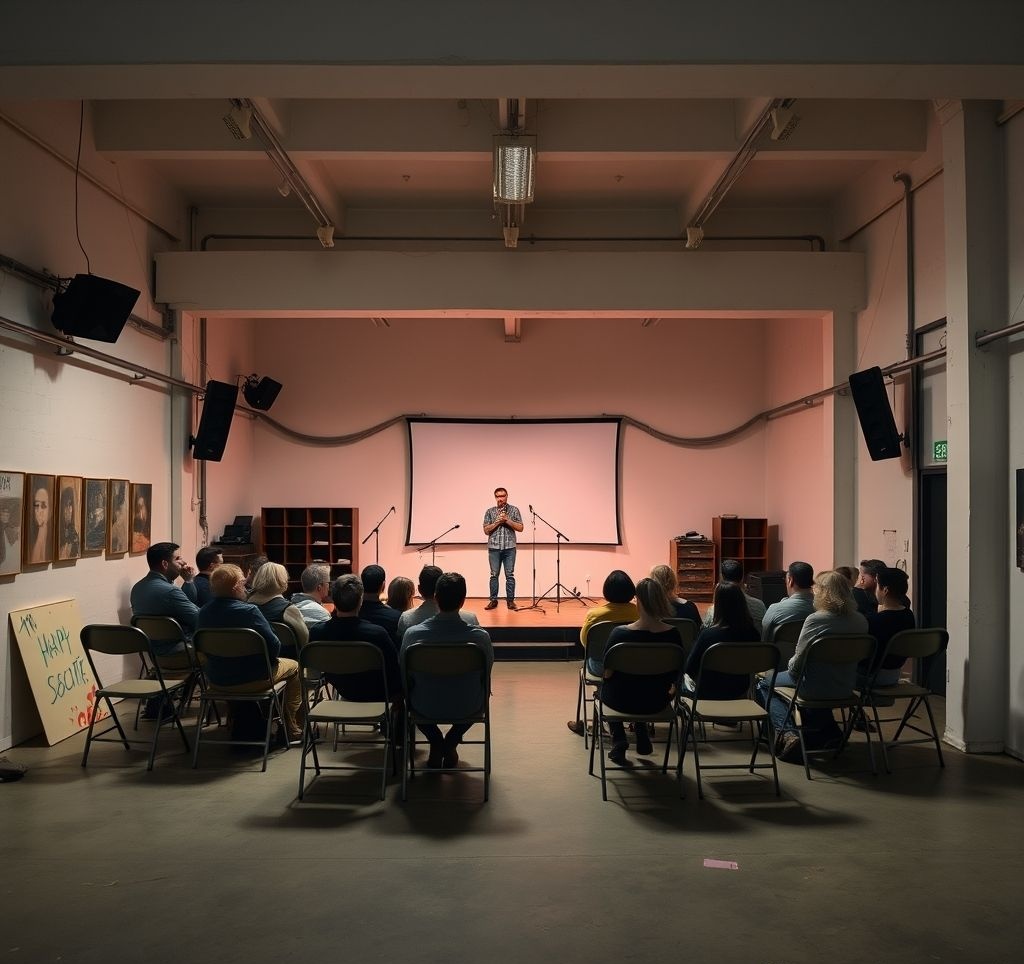
Comedy production is everything that happens around the joke: the room, the chairs, the microphone, the lighting, the order of acts, the camera angles, the edit. Audiences rarely notice it when it works, and always feel it when it doesn't. In alternative comedy most of this work is done by the comedians themselves, so producing is a core skill, not a sideline.
This guide covers the three things you're most likely to produce: a live show, a filmed set or special, and a comedy podcast. For the money side, see how comedians make money.
The principle behind all comedy production
Comedy depends on shared attention. Laughter is contagious; people laugh more when they can hear others laughing and when nothing is pulling their focus. Almost every good production choice follows from that:
- Density beats size. Forty people packed into a small room produce a better show than eighty in a room for two hundred.
- Remove distractions. Bar noise, a coffee machine, a TV, a gap between stage and front row: each one costs laughs.
- Clarity first. If the audience can't hear or see the comedian clearly, nothing else matters.
Producing a live comedy show
1. Find a room and agree a deal
Most independent comedy happens in rooms built for something else: bar back rooms, bookshops, galleries, small theatres. The common deals are a free room (the venue earns on the bar), a split of ticket income, or a hire fee. Get the basics in writing: the date, the time you get access, who handles tickets, who pays for what, and whether the bar will stay quiet during the show. Our piece on the rise of micro-venues explains why so many alt nights now work this way.
2. Shape the room
- Put the stage where the audience can't see the bar or door behind it, if possible.
- Bring the front row close and remove empty chairs, so people sit together.
- Low ceilings help: laughter stays in the room.
- Light the performer, and dim (but don't black out) the audience. Comics often want to see faces.
3. Sort the sound
One reliable wired microphone on a stand, a small PA and someone who knows how to set levels is enough for most rooms. Test it before doors open. Avoid feedback by keeping speakers in front of the microphone, and have a spare cable. A wireless microphone is nice to have and a liability if nobody checks the batteries.
4. Book the lineup and the host
The host matters more than any single act: they warm the room, set the tone and recover it after a set that bombs. Book a mix of styles, give each act a clear set length, and tell everyone the running order in advance. A classic shape is to open strong, put riskier or quieter acts in the middle, and close with the act most likely to finish high. Our guide to workshopping material covers the work-in-progress shows many alt producers run.
5. Promote it
Start promoting at least a couple of weeks out. List the show on a ticketing platform, post on the social accounts of the venue and the comics (with a poster or short clip), and ask every performer to share it. Regular nights grow mostly by word of mouth, so consistency (same night, same place, reliably good) is the best marketing.
6. Run the night
- Start close to the advertised time; late shows lose energy.
- Have a clear light or signal for when a comic's time is up.
- Keep breaks short, or skip them for shows under 90 minutes.
- Pay performers on the night, as agreed. It builds a reputation that makes booking easier.
Filming stand-up: clips and specials
Filmed comedy is now the main way comedians find new audiences, through short clips on social media and full hours on YouTube or streaming services. Filming comedy is a specific craft: what looks great in a music video can kill a joke.
Cameras
- For clips: one camera on a tripod, framed from the waist or chest up, set at the comedian's eye level, will do. Shoot every set. Good clips come from ordinary nights.
- For a special: three cameras is a common minimum: a wide shot that shows the room, a medium shot and a close-up. More cameras give the editor options, including audience reaction shots.
- Keep the camera still. Comedy is about the face and the timing, and restless camerawork distracts from both.
Audio
Bad audio ruins filmed comedy faster than bad video. Record the comedian's microphone directly from the sound desk or with a separate recorder, and add microphones pointed at the audience so the laughter sounds full. Mixing those sources is where a filmed set comes alive. Record a backup.
Lighting and the room
Light the performer evenly and keep enough light on the front rows that reaction shots are usable. A packed, well-chosen venue on camera makes the comedian look like a big deal; a half-empty room makes them look like they're struggling. That's why many specials are taped across two shows, with the best material from each cut together.
Editing
- Cut on the laugh, not on the line. Leave space for laughter to land.
- Don't over-trim. Pauses and hesitations are part of timing.
- Use reaction shots sparingly and honestly; inserting laughs that didn't happen is noticeable and damages trust.
- For clips, start with the premise within the first few seconds and end on the biggest laugh.
Sketch and character video follow normal short-film production: script, storyboard or shot list, rehearsal, shoot and edit. The comedy rules still apply: keep the camera simple, protect the timing, and cut anything that slows the escalation. For releasing a filmed hour, see our guide to self-releasing a comedy special.
Producing a comedy podcast
Podcasts are the cheapest comedy format to produce and the hardest to make stand out. The production process looks like this:
- Format. Decide what the show is: chat, interview, improvised characters, a recurring bit or game. A simple, repeatable format makes the show easier to make and easier to recommend.
- Record. Give each person their own dynamic microphone, record each voice on a separate track, and use a quiet room with soft furnishings. For remote guests, use a service that records each participant locally.
- Edit. Cut dead air and tangents that go nowhere, but keep the interruptions and laughter that carry the chemistry. Comedy podcasts are over-edited more often than under-edited.
- Mix and master. Balance the voices, add intro and outro music you have the rights to use, and normalise loudness so the show sits at a consistent volume on every app.
- Publish. Upload to a podcast host, which creates the RSS feed that Apple Podcasts, Spotify and other apps read. Keep a regular schedule.
- Video (optional). Many comedy podcasts now also record video for YouTube and short clips. If you do, plan camera angles and lighting before recording.
Our step-by-step guide to starting a comedy podcast covers equipment and growth in more detail, and recording a comedy album covers live audio for release.
Common production mistakes
- Choosing a venue too big for the expected audience.
- Letting the bar, kitchen or street noise compete with the show.
- Not testing the microphone before doors.
- Too many acts, too long a night.
- Filming with only the camera's built-in microphone.
- Over-editing laughs out of a filmed set or chemistry out of a podcast.
- Not getting written permission from performers before posting their sets online.
Producing as a career skill
Producing your own show is one of the fastest ways to progress in alternative comedy. It gives you regular stage time, lets you book the comedians you admire (who then book you), and builds an audience that associates you with good nights. Many of the scenes' most important rooms began as one comedian's monthly show. When you're ready to take a show on the road, see our guide to booking a comedy tour.
Frequently asked questions
How do you produce a comedy show?
Secure a venue and agree a deal (free room, door split or hire fee), book a host and a lineup, set a running order, check the microphone and lighting, promote the show for at least a few weeks, and pay the comics what you promised. Then do it again on a regular schedule.
How is a comedy podcast produced?
Plan a format, record with a dedicated microphone for each person in a quiet room, edit for pace without cutting the chemistry, add intro music and loudness-normalise the audio, then publish through a podcast host that distributes to Apple Podcasts, Spotify and others.
How many cameras do you need to film stand-up?
One fixed camera works for a clip. For a special, three is a common minimum: a wide shot, a medium and a close-up, plus separate audio from the comedian's microphone and microphones on the audience.
What is the most important thing in a comedy room?
A full, packed-together audience close to the stage, with a working microphone and the performer lit. Comedy dies in half-empty rooms with distractions, so many producers choose a smaller venue they can fill.