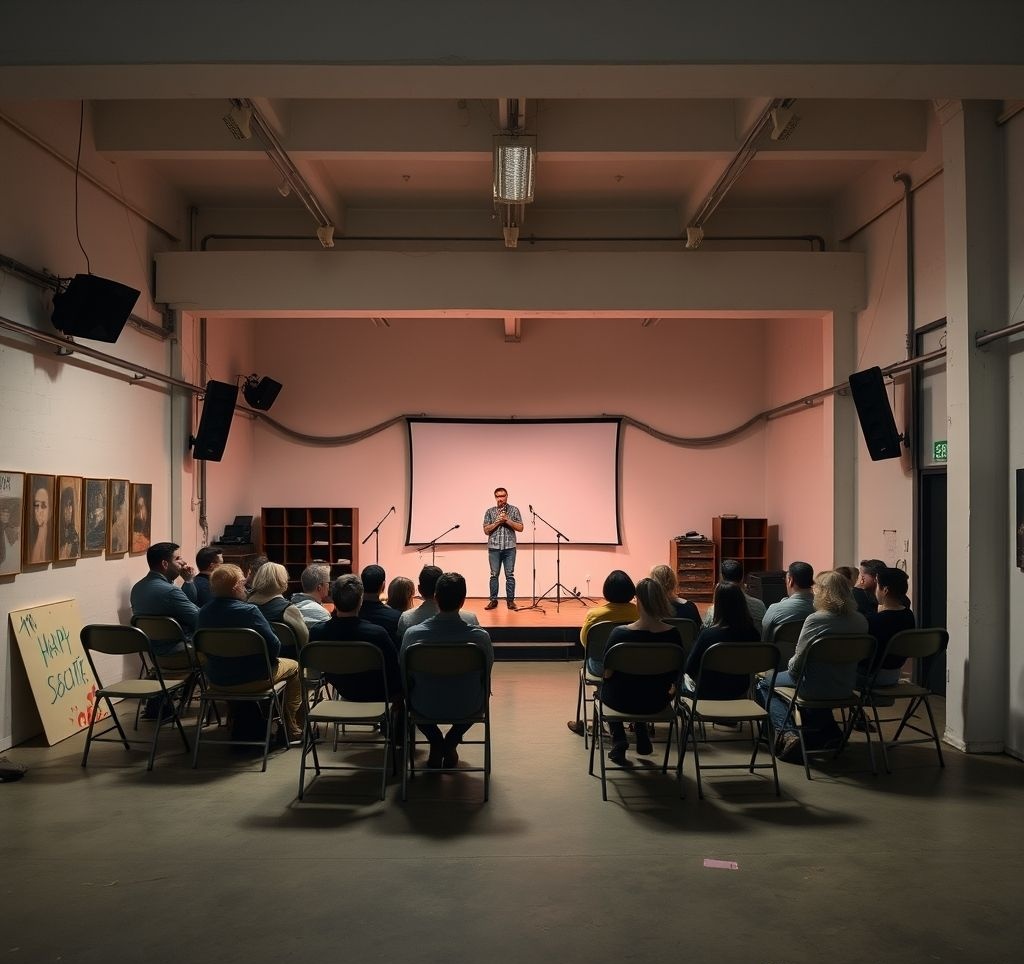
How to Book a Comedy Tour Yourself (and When to Hand It Off)
Most comedians' first tours are booked from a spreadsheet and a lot of polite emails. Here's how to do it without losing money, friends or your voice.
To book a comedy tour, you need three things before you send a single email: a show that works, evidence that people in specific cities will buy tickets to see it, and the patience to route dates so you aren't driving eight hours between gigs. Most comedians book their first tours themselves, through alt rooms, independent venues and local producers, long before an agent is interested. This guide covers how to do that, the deal types you'll be offered, and the point at which handing it off makes sense.
We don't publish fee figures here: they vary enormously by country, city, venue and act, and any number we gave would be wrong for most readers. Instead this guide explains how the deals work so you can judge an offer for yourself. For the wider business side, see the business of comedy.
Are you ready to tour?
Touring before you're ready is expensive and demoralising. Check yourself against this list:
- You have a show. A tested set of the length you're selling, ideally an hour or a strong 30–45 minutes, that has been through previews and works with strangers. (See how to workshop material and how to write a Fringe hour.)
- You have an audience somewhere outside your home scene. People who follow you online in specific cities, listeners of your podcast, fans from festival runs or support slots.
- You have a way to reach them. An email list, a social following that actually responds, a podcast feed, a Patreon.
- You can afford to lose some money. First tours often break even at best. Know your limit before you book.
Choose the right rooms
Book rooms you can fill. A 60-seat room with 55 people in it is a great show; a 300-seat theatre with 55 people is a bad one, and the venue will remember.
- Alt nights and independent comedy shows run by local producers. They already have an audience and know the city. A headline or "special guest" slot on an established night is a low-risk way to test a market.
- Small independent venues: back rooms of bars, bookshops, arts centres, small theatres and music venues on off nights. The growth of these rooms is covered in the rise of micro-venues.
- Comedy clubs, which book acts for weekends or one-off shows; useful if your material suits club audiences.
- Festivals, which bundle audiences, press and other comedians into one place. See our comedy festivals guide.
- House shows and unusual spaces: living rooms, record shops, galleries. Often wonderful for alt acts, and a good way into towns without a comedy scene.
Understand the deal
Every offer you get will be some version of these structures. Know which one you're agreeing to.
| Deal | How it works | Who carries the risk |
|---|---|---|
| Flat fee / guarantee | The venue or promoter pays you an agreed amount regardless of sales. | The venue. Usually offered when they're confident in your draw. |
| Door split | You receive a percentage of ticket income (sometimes after agreed costs are deducted). | Shared, but mostly you: a quiet night pays little. |
| Guarantee versus percentage | You get the guarantee or a percentage of the door, whichever is higher. | Balanced: a floor with upside. |
| Guarantee plus bonus | A fee, plus an extra share once sales pass an agreed point. | Balanced; common for bigger shows. |
| Hire / four-wall | You rent the room and keep the ticket money (minus fees). | All you. Profitable only if you're sure you'll sell. |
Questions to ask before agreeing
- Is the split calculated on gross ticket income, or after costs? Which costs?
- Who sets the ticket price, and who handles ticketing and fees?
- What promotion will the venue do: mailing list, social posts, listings, posters?
- What's the capacity, and is the room seated?
- Is there a sound system, a mic, a light, a tech? What time is load-in?
- Can you sell merch, and does the venue take a cut?
- When and how are you paid? (Ask for settlement on the night, with a ticket report.)
- Is accommodation or travel included?
Pitching venues and producers
- Build a target list. For each city: two or three suitable rooms, the local comedy producers, and the person who books them. Note the deal types they usually offer.
- Write a short pitch. Who you are in one line, the show in one line, your evidence of an audience in that city (past turnout, mailing list numbers there, fans who've asked), dates you can do, and a link to a clip and a press photo.
- Send it well ahead. Small venues often book a few months out; theatres and festivals much further. The earlier, the more choice of dates.
- Follow up once, about a week later. Bookers are busy; one polite follow-up is normal. Beyond that, move on.
- Track everything in a spreadsheet: who you contacted, when, what was offered, status.
- Ask comedians. Your peers who've toured know which rooms pay fairly, which producers are lovely and which to avoid. This is the single best source of information.
Routing: the geographic puzzle
Routing is the art of putting dates in an order that minimises travel and cost without exhausting you.
- Cluster by region. Book nearby cities in the same week rather than criss-crossing the country.
- Anchor the run. Start with the one or two dates you're most confident of (a festival slot, a friend's popular night) and build the other dates around them.
- Weekend vs weekday. Bigger cities can fill weeknights; smaller towns usually need a Friday or Saturday.
- Leave rest days. Back-to-back shows with long drives grind you down, and your shows get worse.
- Price the travel before confirming. A tiny fee in a city that's a flight away loses money.
- Check visa rules before any international date. Performing for money abroad often requires specific permission; check the official government guidance for each country well in advance.
Selling the tickets
Booking is half the job. The other half is getting people into the rooms, and on small tours that's mostly on you.
- Announce to your own people first. Your email list, Patreon, podcast listeners. A pre-sale code for subscribers rewards loyalty and gives you early evidence of demand.
- List the dates everywhere fans look: your website, social bios, the venue's listings, and gig-tracking services such as Bandsintown.
- Make city-specific posts. "Leeds, I'm coming on 14 March" works better than a generic tour poster.
- Use the venue's channels. Ask for their mailing list and social posts, and supply a short description, photo and clip.
- Guest on local and niche podcasts a few weeks before each date. See our comedy podcasts guide.
- Contact local press and listings: city culture sites, student papers, community radio.
- Collect emails at every show, by QR code or a sheet at the merch table, so next time you have a list in that city.
Budgeting a run
Do a simple spreadsheet before you confirm, not after. For each date, list:
- Expected income (realistic ticket sales times your share, or the fee)
- Travel (fuel, trains, flights)
- Accommodation (or a friend's sofa)
- Food and incidentals
- Promotion (posters, ads)
- Commission, if anyone is taking one
- Merch stock and expected merch income
Then plan for the low scenario: what happens if every show sells two-thirds of what you hope? If that wipes you out, shrink the tour. Keep receipts for everything; touring costs are often deductible against your performing income, and an accountant who works with performers is worth finding early.
Agents, managers and when to get them
Agents book work and negotiate deals; managers guide the career as a whole. Both take a commission, typically a percentage of the income they handle (in the US, talent agents commonly take 10 percent; managers' rates vary more). Both are worth it only when they bring in more than they cost.
Signs you're ready for an agent
- Venues and promoters are approaching you, not the other way round.
- You're selling out rooms and need bigger ones you can't access yourself.
- Booking and admin are eating time you need for writing.
Agents represent demand that already exists; they rarely create it from scratch. Build the audience first. If an agency or "manager" asks you for money upfront to represent you, walk away.
Common touring mistakes
- Rooms too big. Book the room you can fill, not the one you hope to.
- Too many dates, too far apart. Exhaustion makes for flat shows.
- Relying on the venue to promote. Most small venues can't sell a show on your behalf.
- Touring an unfinished show. A tour isn't a preview run, unless you sell it honestly as one.
- No paperwork. Settle and get a ticket count every night.
- Forgetting the next tour. Every date should leave you with new email addresses and a booker who wants you back.
A tour also sets up what comes next: an hour honed over a run of shows is ready to record. See how to record a comedy album and how to self-release a special.
Frequently asked questions
How do you go on a comedy tour?
Start with a show you know works and cities where you can draw an audience. Build a list of suitable venues and local producers, pitch them with dates and a short clip, agree terms in writing, route the dates geographically, and promote each show directly to your fans and through the venue.
Do I need an agent to tour?
Not at first. Most comedians self-book their early tours through alt rooms, small venues and local producers. Agents become useful when demand is strong enough that venues are approaching you and the deals are big enough to justify their commission.
What is a door deal in comedy?
A door deal (or door split) means the performer receives an agreed percentage of ticket income rather than a flat fee. It rewards you if the show sells and costs you if it doesn't, so it depends heavily on your own promotion and the venue's.
How many people do I need to draw before touring?
Enough to make the room feel full and cover your costs. For a first tour that may only mean a few dozen people per city in small rooms. Use pre-sales, mailing list sign-ups and past turnout in each city as evidence before committing.