The Economics of Alt Comedy: Who Pays for the Weird Stuff?
Alternative comedy has always been subsidised by someone: the bar, the performer, the student, the platform. An analysis of where the money comes from, where it goes, and what that does to the work.
The economics of alt comedy come down to one uncomfortable fact: the strange, risky work the scene is known for has almost never paid for itself. It has been subsidised: by bars selling drinks, by performers working for free, by students paying tuition at improv theatres, and, for a while, by streaming platforms flush with investor money. When those subsidies shift, the comedy shifts with them.
This is an analysis, not a how-to. If you want the practical version (how individual comedians put an income together), read our guide to how comedians make money. Figures below are cited where real data exists; where it doesn't (comedy is a cash-heavy, privately contracted business), we say so and reason qualitatively.
The bar is the original patron
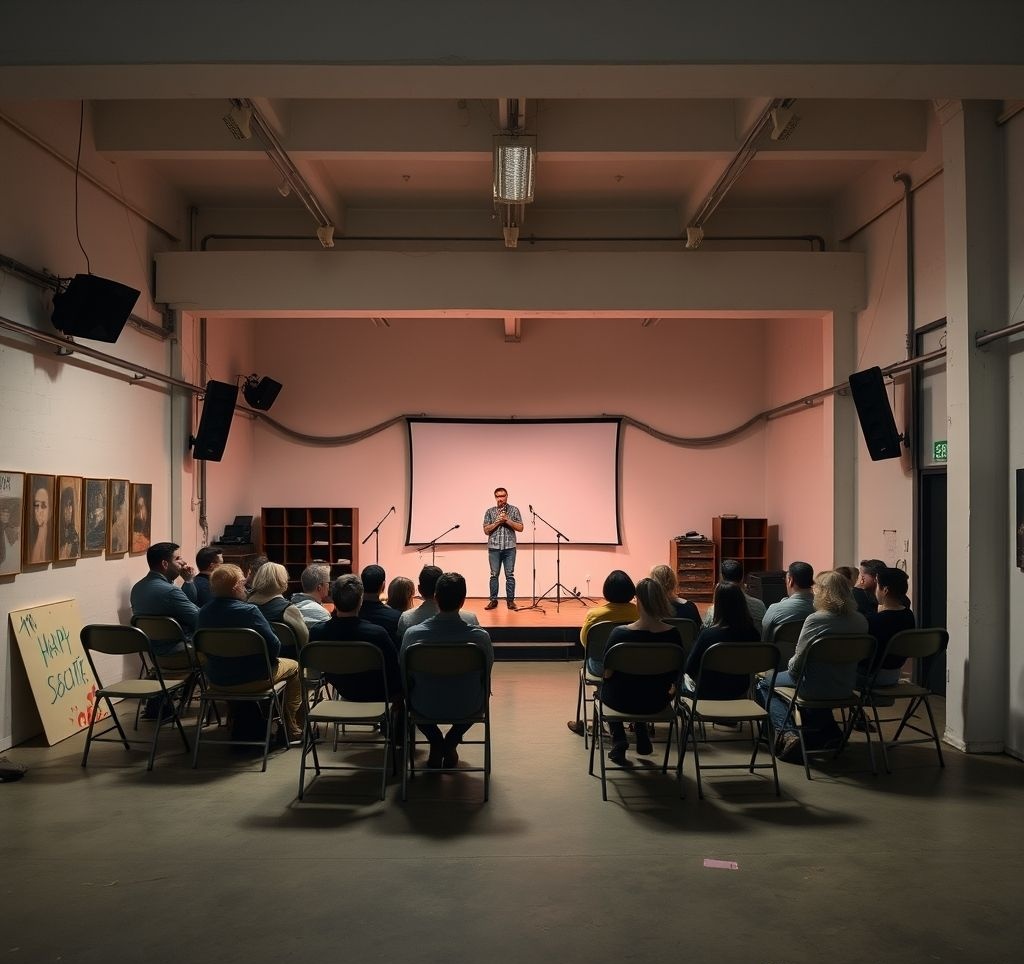
Alternative comedy was born in rooms that existed to sell something else. The Comedy Store in London (1979) began upstairs at a strip club; Luna Lounge in New York and Largo in Los Angeles were music venues; countless modern alt nights run in the back rooms of bars and bookshops. See our histories of Luna Lounge and Largo.
The economic logic is simple. A venue with a quiet Tuesday can give a room to a comedy producer for free or a door split, and earn its money on the bar. Commercial comedy clubs work the same way at scale: the familiar drink minimum exists because food and beverage, not tickets, often carries the business.
That model has two consequences. It keeps live comedy cheap and plentiful, which is good for audiences and beginners. And it creates permanent downward pressure on performer pay, because the comedy is, in accounting terms, the thing that fills seats for the product. Our piece on the rise of micro-venues looks at how this works in the small rooms where most alt comedy now happens.
The performer as investor
The second subsidy is the comedians themselves. Stand-up has an unusually long unpaid apprenticeship: years of open mics and unpaid spots before regular paid work. In practice that favours people who can afford to work for free, live in expensive comedy cities and stay out late on weeknights, which is a quiet barrier to who gets to make alternative comedy at all.
The Edinburgh Festival Fringe is the clearest example. It's huge: the Fringe Society reported about 2.6 million tickets issued across 3,893 shows in 2025, and comedy was the biggest genre, at roughly 36 percent of the shows in that year's printed programme (Chortle; Edinburgh Festival Fringe Society). But the Fringe is an open-access festival, which means performers typically bear the cost of registration, venue hire, accommodation and publicity. Accommodation costs in Edinburgh in August are a perennial complaint. Many performers treat a loss as the price of reviews, industry attention and a finished hour they can tour. It works as a research and development system for British comedy, and the performers fund most of it. Our guide to writing a Fringe hour covers the creative side.
The improv school model
Improv theatres found a different solution: the audience for classes is larger than the audience for shows. Many theatres earn much of their revenue from tuition, while house-team performers are paid little or nothing and treated as students on a path to professional work. That model funded some of the most influential comedy institutions in the US. It also drew sustained criticism in 2020, when performers at major theatres spoke publicly about pay, race and working conditions. See our improv guide for the history.
Streaming: a boom with outliers
From the mid-2010s, streaming platforms poured money into stand-up specials. The headline deals were enormous: Netflix's deals with Dave Chappelle and Chris Rock, reported in 2016, ran to tens of millions of dollars. Those figures were never typical, and the deal terms for most specials are private. What can be said with confidence is that the streaming boom created a lot of specials and then, as platforms cut back spending in the early 2020s, fewer of them.
For alternative comedians, the streaming era was a mixed blessing. It funded unusual work that would never have reached television: Hannah Gadsby's Nanette, Bo Burnham's Inside, Jacqueline Novak's Get On Your Knees. It also made a platform's taste the gatekeeper for which hours got taped.
Self-release and the direct audience
The counter-model began in December 2011, when Louis C.K. sold Live at the Beacon Theater for $5 from his own site and announced that it had grossed over $1 million within about two weeks (ABC News). The specific method (paid download) didn't become the norm. The principle did: a comedian with a large enough direct audience doesn't need a platform's permission or money.
The 2020s version is mostly free. Comedians pay for a taping and post it on YouTube, earning some ad revenue but mostly using the special to sell tickets. Economically, the special has moved from product to marketing. The cost has moved from the platform to the performer. See our guide to self-releasing a special.
Subscriptions: the most stable money
The most interesting development for niche comedy is subscription. A comic with a few thousand dedicated fans paying a small monthly fee on Patreon or a similar service can earn something closer to a salary than any club pays, without needing a mass audience. That suits alternative comedy, whose whole premise is that it doesn't appeal to everyone.
Dropout shows the model at company scale. The service that grew out of CollegeHumor was unprofitable through the late 2010s; after rebuilding around subscription it became profitable, introduced profit sharing for staff, and its CEO Sam Reich has said it passed one million paid subscribers (Fast Company; AV Club). It is a rare case where weird, improvised, deliberately unpolished comedy is the business model rather than a loss leader.
Platforms giveth: the fragility problem
Every new income stream comes with a landlord. Two episodes show the risk:
- Spotify, 2021. In late 2021 Spotify removed many comedians' albums during a dispute with Spoken Giants, which collects royalties for the written content of comedy, similar to songwriting royalties (Rolling Stone). Whether jokes should earn the equivalent of publishing royalties is still argued over.
- Just for Laughs, 2024. The parent company of the Montreal festival sought creditor protection in March 2024, citing the pandemic, inflation and changes to online video monetisation among its problems. Its brands were bought by ComediHa!, a smaller transitional festival ran that summer, and the festival has since returned (CBC).
The lesson in both cases is the same. A comedian or institution dependent on one channel can lose it overnight. Diversification is less a growth strategy than a survival strategy.
The squeezed middle
Put the pieces together and a pattern emerges, though it's one we can describe more confidently than we can measure. At the top, the biggest stand-ups sell out arenas and command large deals. At the bottom, there are more people doing open mics and posting clips than ever. The hard part is the middle: comics with real skill and a modest following, who used to make a steady living on the club circuit, college gigs and the occasional TV credit.
Those performers now have more tools (podcasts, subscriptions, YouTube) and less predictability. The old ladder rewarded patience; the new one rewards audience-building, which is a different skill and not one that every great comedian has.
What would help
None of these problems has a single fix, but the levers are clear enough: fair payment for writing as well as performance; transparent pay at clubs and theatres; public and charitable funding for live comedy, which in many countries receives far less arts support than theatre or music; and, for performers, ownership of recordings and a direct line to their audience.
Alternative comedy has always found a way to survive on scraps. The question for the next decade is whether its most interesting voices can do better than survive.
Frequently asked questions
Is alternative comedy profitable?
For a few performers, yes, especially those who build a direct audience through touring, podcasts or subscriptions. For most, alt comedy is subsidised by day jobs, unpaid stage time and bar revenue, and only becomes a living once a performer can sell tickets on their own name.
Do comedians lose money at the Edinburgh Fringe?
Many do. Fringe performers usually pay their own registration, venue, accommodation and marketing, and ticket income often doesn't cover it. They go for reviews, industry attention and the chance to develop an hour.
Why are comedy clubs able to pay so little?
Many clubs make their money on food and drink rather than tickets, and there is a large supply of comedians willing to perform for exposure or practice. That keeps fees for early-career sets low.
What does self-releasing a special do for a comedian's income?
It trades an up-front platform fee for ownership. A comedian pays for the taping, keeps the rights and earns from downloads, ads or ticket sales driven by new fans. It works best for comics who already have an audience to sell to.